 Empire Dumpsters
Concrete washout container rental, $499 flat
One container, two jobs: contained washout for slurry and wastewater, plus hauling for broken concrete, brick, dirt and asphalt. 3 days rental, 10 tons of disposal included.
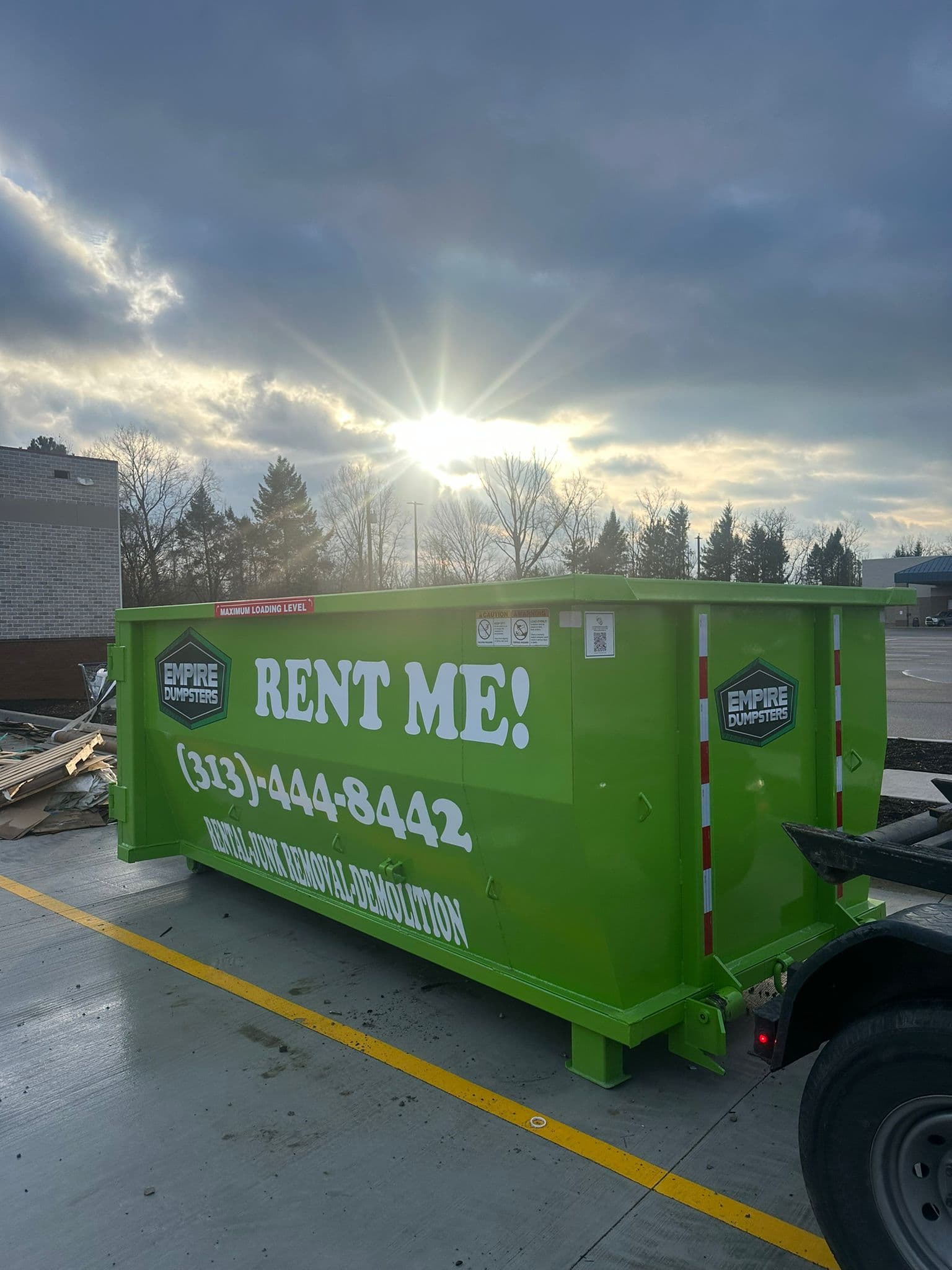
Slurry cannot go down a storm drain
Rinsing a chute, a mixer drum or hand tools after a pour produces washout water: caustic, high-pH slurry that is not supposed to reach a storm sewer, a ditch or bare ground under EPA guidelines. A lot of small crews still rinse on open dirt because there is nowhere else to put it. Our container gives you a sealed, leak-proof spot to washout into so the slurry stays contained and gets hauled off with the rest of the job’s heavy debris, not left in a puddle on the site.
The same container does double duty once the pour is done. Broken forms, excess concrete, brick, block, dirt and asphalt all go in at the same flat rate, so you are not renting one container for washout and a second one for the debris.
Heavy material needs a different weight allowance
| Material | Best fit |
|---|---|
| Drywall, lumber, furniture, household junk | Standard 15, 20 or 30 yard dumpster |
| Concrete, brick, block, dirt, asphalt | Concrete & heavy-debris container ($499, 10 tons included) |
| Washout slurry and wastewater from a pour | Same heavy-debris container, contained and sealed |
A standard bin only includes 2 to 4 tons, so heavy material fills the weight allowance long before it fills the box. Our 10-ton flat rate is built for that math instead of fighting it. Need a regular bin for the rest of a job? See our full pricing or the size guide.
One flat rate for concrete and heavy debris
$499 for a 3 days rental with 10 tons included. Delivery, pickup and disposal are all in that number. Mixed light debris? Compare the standard sizes on the pricing page.
Concrete, brick, block, dirt, asphalt, plus washout containment
| 3 days | $499 |
| Tons included | 10 |
These are our flat base-zone rates. Cities farther from our Dearborn yard can add a delivery fee, and extra days add a little more. Enter your address in the booking portal for your exact all-in price, or call (313) 444-8442.
Concrete, brick, dirt, asphalt, and the water from cleaning up after them
- Broken concrete slabs, driveways and patios
- Brick, block and masonry debris
- Excavated dirt and fill
- Asphalt millings and chunks
- Washout slurry from chutes, drums and tools
- Household trash and bagged garbage, keep that in a standard bin
10 tons, roughly measured
Concrete runs about 2 tons per cubic yard, so the 10-ton allowance covers roughly 5 cubic yards, close to a full driveway and walkway tear-out. Go past it and the overage bills at $75/ton, straight off the disposal facility’s certified scale ticket.
Washout and heavy-debris questions
Can concrete or brick go in a regular dumpster instead?
It can, but it rarely makes sense. A 20 yard only includes 3 tons, and a truck of broken concrete or block can hit that in one load, leaving you paying overage on a container built for volume, not weight. Our heavy-debris container includes 10 tons for the same reason a regular bin includes 2 to 4: it matches what the material actually weighs.
What does 10 tons of concrete actually look like?
Broken concrete runs roughly 2 tons per cubic yard, so 10 tons is around 5 cubic yards, about a slab tear-out from a two-car driveway or a small patio and walkway combined. It fills the container by weight well before it fills it by volume, which is normal for this kind of debris.
What is a washout container actually for?
Concrete trucks and tools get rinsed after a pour, and that rinse water is slurry, caustic wastewater that cannot legally go down a storm drain under EPA guidelines. Our container gives crews a contained spot to washout chutes, mixers and tools so the slurry does not end up on the ground or in the sewer.
Can I mix concrete, brick, dirt and asphalt in the same container?
Yes, all four are billed the same flat rate and count toward the same 10-ton allowance. Keep it to those heavy materials though. Mixing in household junk or bagged trash means it gets billed and disposed of as heavy debris, which is not the cheaper route for that kind of waste.
Do I need the washout use, the hauling use, or both?
Most jobs use both out of the same container: washout chutes and tools into it during the pour, then load broken concrete or excess material in after. If you only need washout containment for a day with no material to haul, call and we will talk through whether the flat rate still makes sense for your job.
Pouring this week?
Call (313) 444-8442 and we will get a washout container on site before the truck shows up.